
Missouri Birth Records
Missouri birth records are official vital documents maintained by the Bureau of Vital Records within the Missouri Department of Health and Senior Services. The state has kept birth certificates since January 1, 1910, and certified copies are available through the state office, one of 115 local public health agencies across Missouri, or through VitalChek online. This guide covers how to find Missouri birth records, who can request them, what they cost, and where to look for older historical documents dating back before the state registry began.
Missouri Birth Records Quick Facts
Where to Find Missouri Birth Records
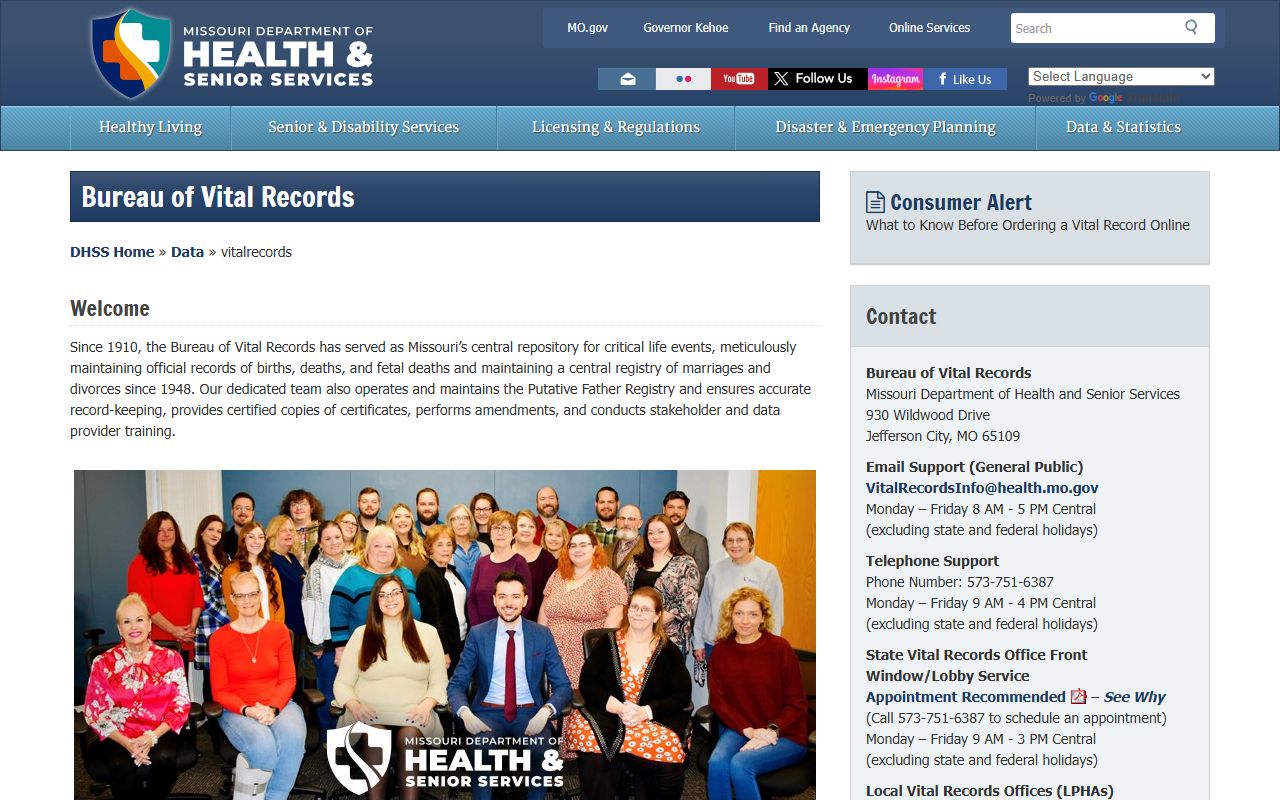
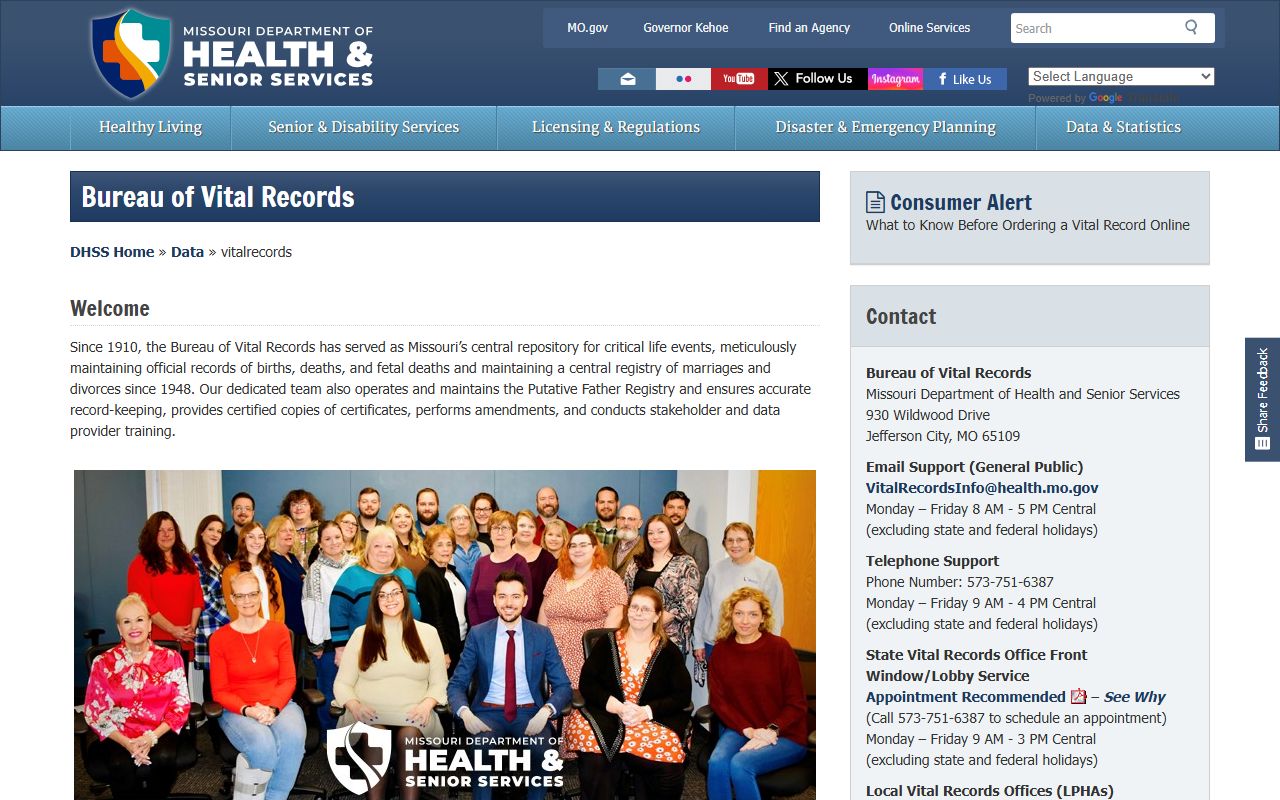
Missouri maintains birth records at two levels. The state Bureau of Vital Records in Jefferson City holds birth certificates from January 1, 1910 to present. This office is the central repository for all vital records in Missouri. You can reach it at 930 Wildwood Drive, Jefferson City, MO 65109, by phone at 573-751-6387, or by email at VitalRecordsInfo@health.mo.gov. Walk-in service is available Monday through Friday, 9 AM to 4 PM. The state office handles long-form and short-form versions of birth certificates, while local offices issue only short-form copies.
The Missouri Department of Health and Senior Services Bureau of Vital Records operates as the state's main vital records office. According to the Bureau, it has maintained a central registry of Missouri births and deaths reported from January 1, 1910 to the present. The Bureau also maintains marriage and divorce records since July 1, 1948, and operates the Putative Father Registry.
The Bureau's official page describes its core services this way: "The Bureau of Vital Records, within the Missouri Department of Health and Senior Services, provides services including: Maintaining a central registry of Missouri births, deaths, and fetal deaths reported from Jan. 1, 1910 to the present." It also handles corrections and amendments and issues certified copies under state law.
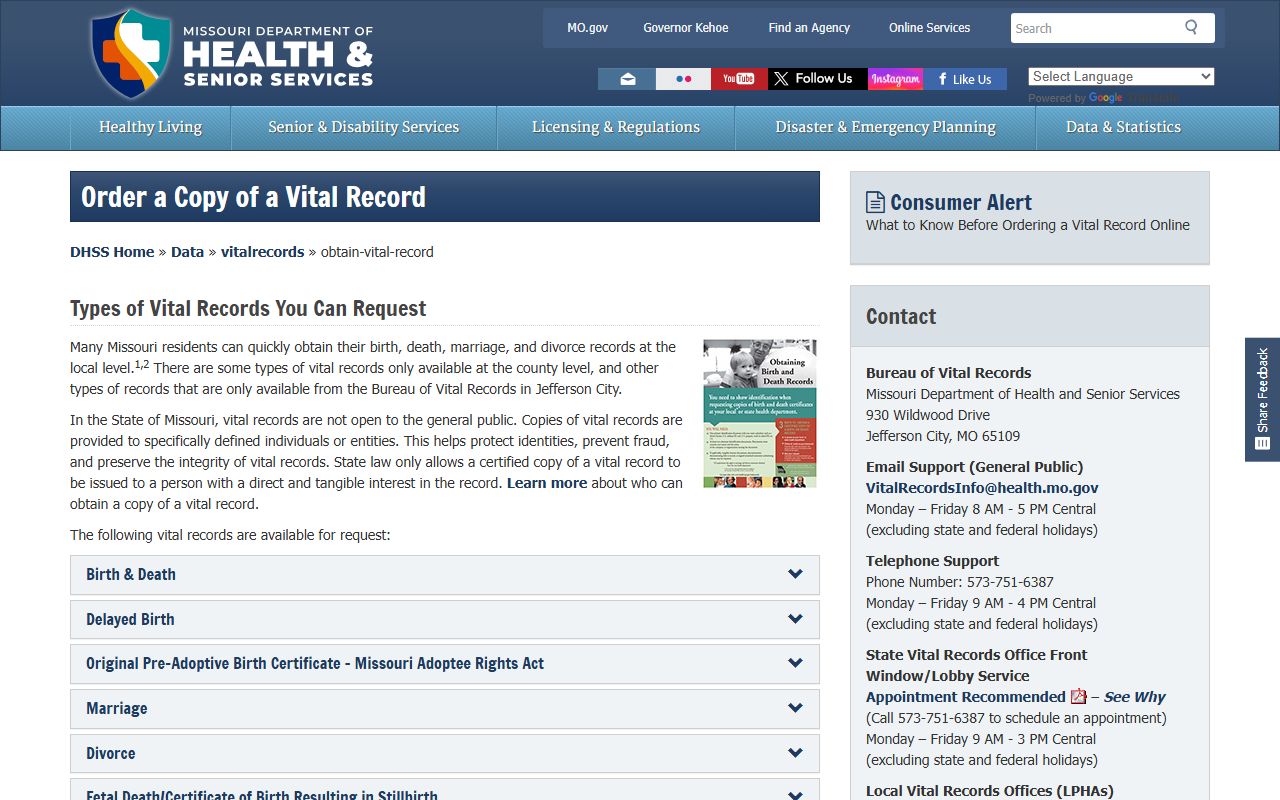
The Missouri DHSS Vital Records request guide outlines all the ways to get a certificate, including walk-in, mail, and online options. According to that page, 115 local public health agencies across the state offer walk-in vital records services, and most can print a certified birth certificate while you wait. Local agencies carry records from 1920 forward. The state office has everything back to 1910.
Online ordering is available through VitalChek, an authorized third-party vendor powered by Lexis-Nexis. VitalChek orders process in about 5 to 7 business days, which is faster than mail. You can also order by phone at 877-817-7363, available 24 hours a day. Phone and online orders carry an additional service fee beyond the base state fee of $15.
Note: If you were born in St. Louis City before 1910, you should contact the Recorder of Deeds at City Hall, 1200 Market Street, Room 126, St. Louis, MO 63103, or call (314) 613-3016. That office holds older records from before the state registry began.
How to Request a Missouri Birth Certificate
Three main methods exist to request a Missouri birth certificate. Walk-in service is the fastest option. You go to the state office or a local public health agency, show your photo ID, fill out an application, and pay the fee. Most local agencies print the certificate while you wait. The CDC's Missouri vital records page confirms the $15 per copy fee and lists the state office contact for out-of-state requesters.
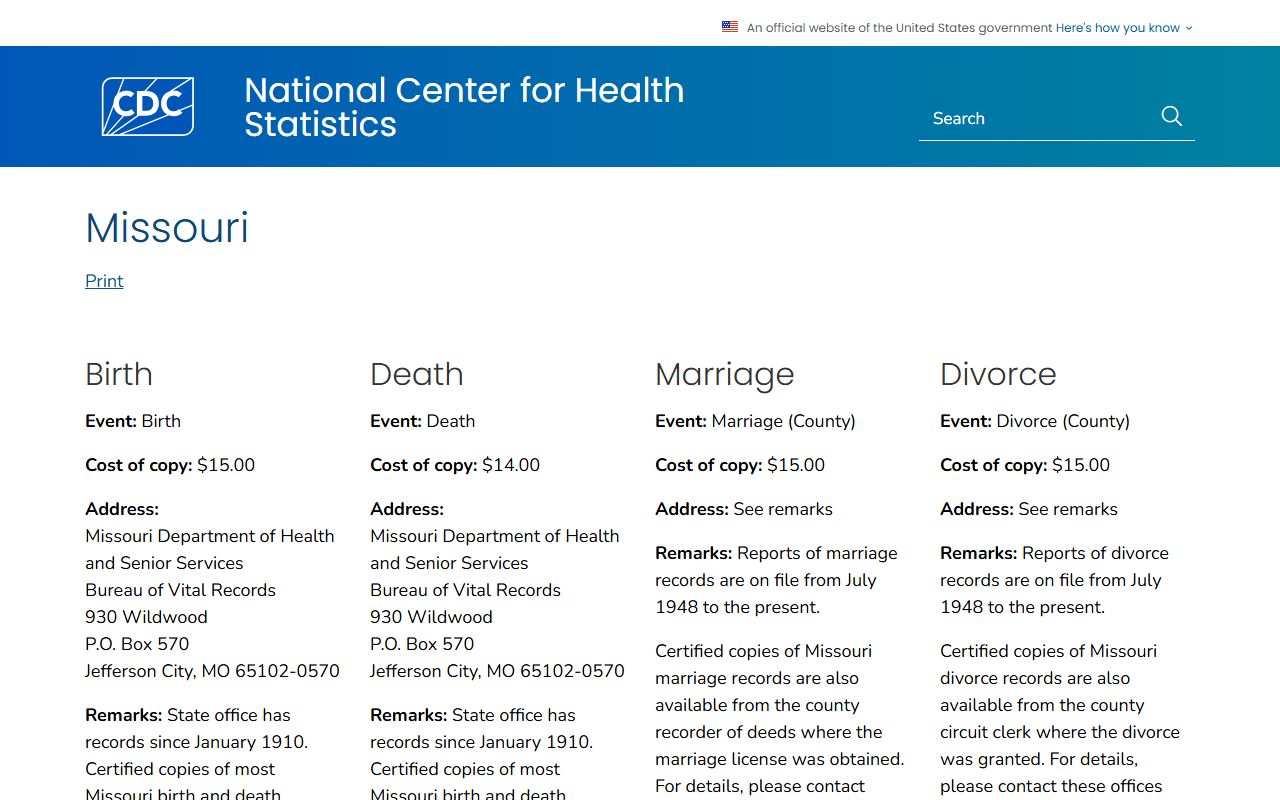
Mail requests take longer to process. Send a notarized application to the Bureau of Vital Records, P.O. Box 570, Jefferson City, MO 65102-0570. Include a check or money order payable to Missouri Department of Health and Senior Services. Also include a legal-size self-addressed stamped envelope. The notary date on your application must match the date you sign it. Standard mail processing takes approximately four to eight weeks. Online orders through VitalChek arrive in five to seven business days.
Photo identification is required for all methods. Walk-in applicants must show a valid photo ID such as a driver's license, passport, military ID, or school or work ID with a photo. If you cannot provide primary photo ID, two alternate forms of ID may be accepted. Mail applicants need a notarized signature on the application form itself.
For newborn births, allow two to three weeks for the hospital to file the certificate with the state before you attempt to request a copy. Records for newborns may not appear in the local or state database for 30 days or more after the birth event. Contact the Bureau at 573-751-6387 if you have questions about a specific record's availability.
Who Can Get a Missouri Birth Record
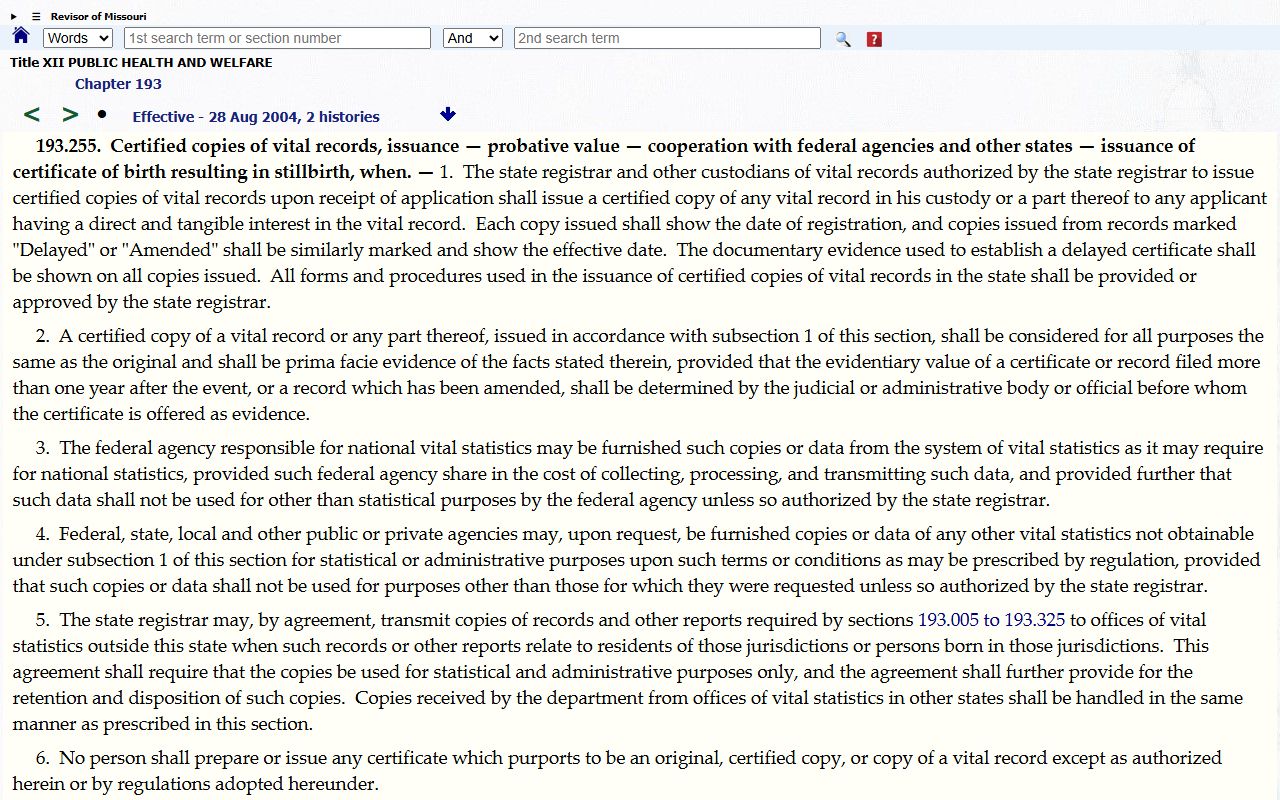
Missouri birth records are not open to the general public. State law limits access to persons with a direct and tangible interest in the record under RSMo 193.255. That means you need a qualifying relationship to the person named on the certificate. The DHSS guide explains: "In the State of Missouri, vital records are not open to the general public. State law only allows a certified copy of a vital record to be issued to a person with a direct and tangible interest in the record."
Immediate family members qualify under Missouri law. The state defines immediate family as those in the direct line of descent, up to but not including cousins. This typically includes the person named on the certificate, their parents, grandparents, children, and siblings. In-laws in the direct line also qualify. Legal guardians, stepparents, and persons acting under a court order or power of attorney may also obtain records. Attorneys, government agencies, and child welfare officials can access records under specific circumstances defined in state statute.
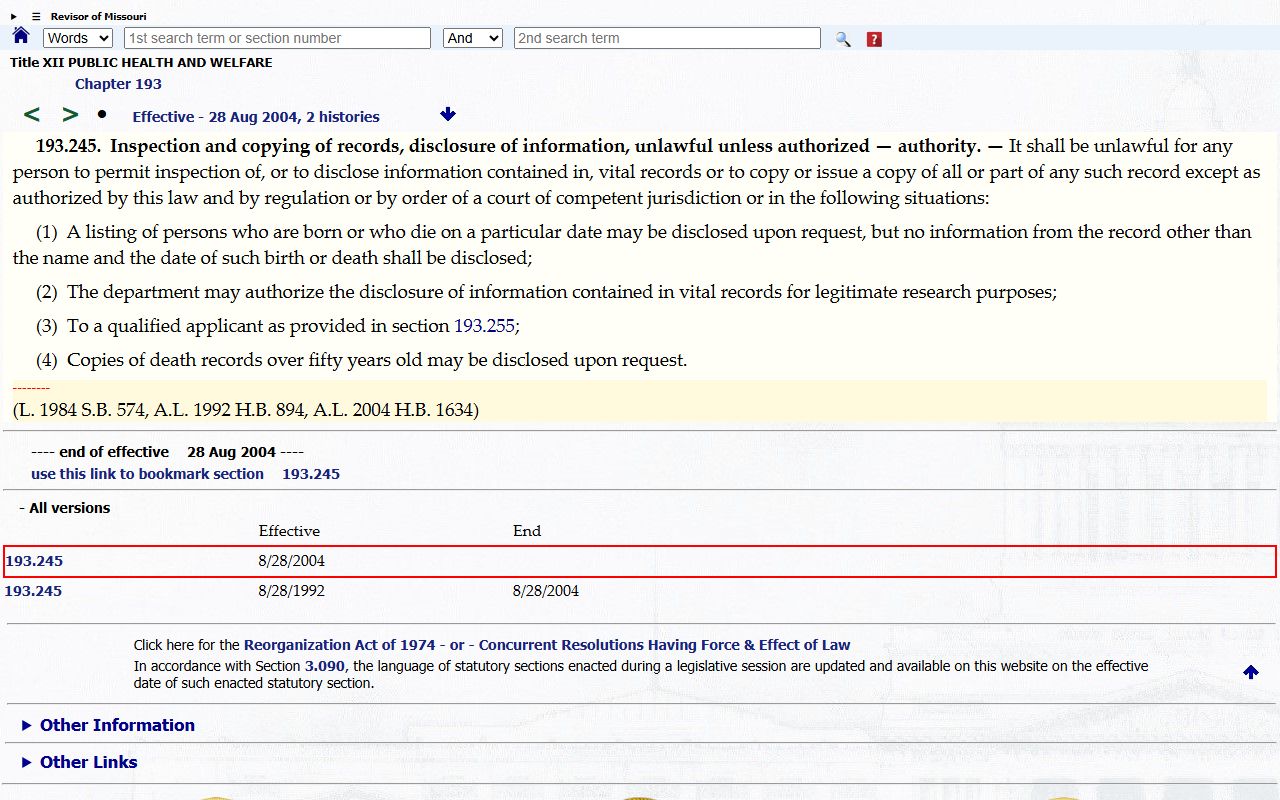
Under RSMo 193.245, it is unlawful to permit inspection of or disclose information from vital records except as authorized by law or by a court order. Missouri courts and the department may authorize disclosure for legitimate research purposes. Copies of death records over 50 years old may be disclosed upon request, but birth records remain restricted regardless of age.
Missouri Birth Certificate Fees
The fee for a Missouri birth certificate is $15 per certified copy. Additional copies of the same record ordered at the same time also cost $15 each. This applies whether you order in person, by mail, or online. Phone and online orders through VitalChek carry an additional service charge from the vendor above the base state fee. If you search and no record is found, the state charges a fee equal to the standard certification amount for a five-year search, as set by RSMo 193.265.
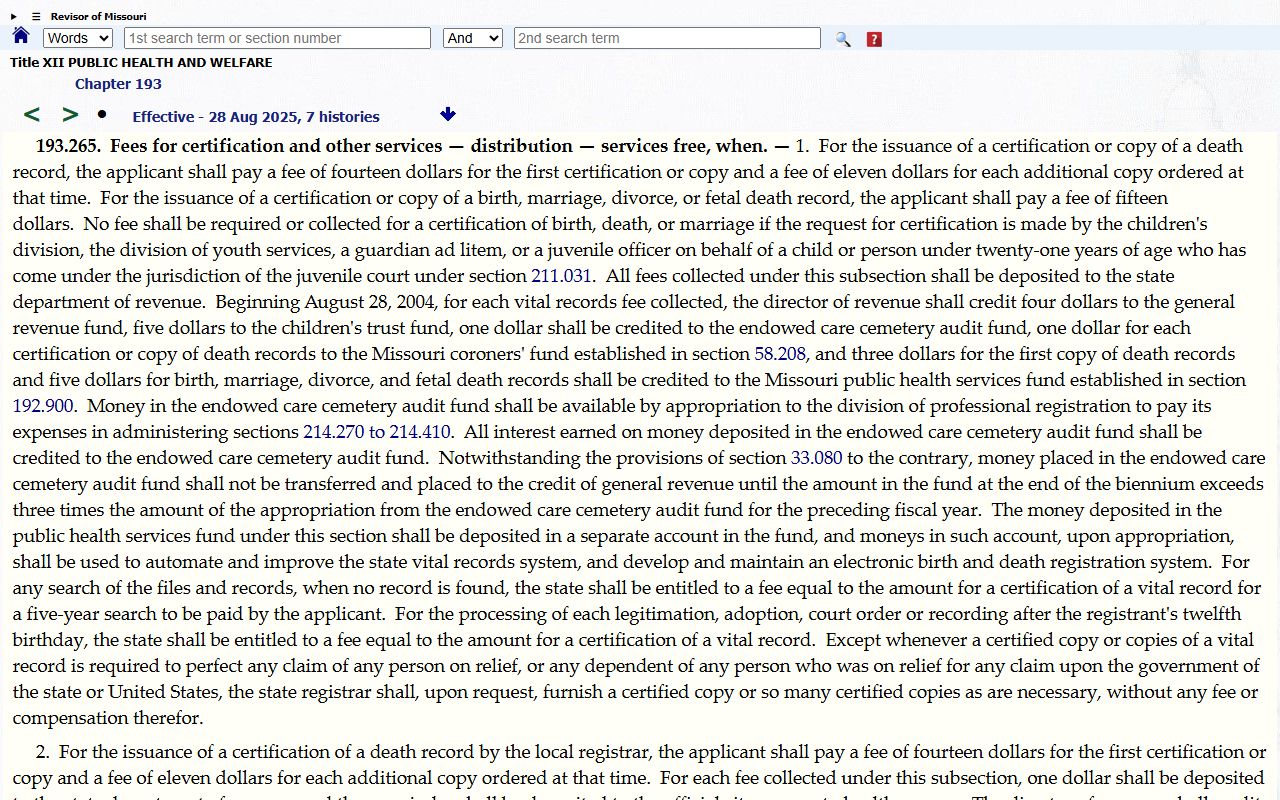
Fee waivers are available in several situations. No fee is charged when a request is made by the children's division, division of youth services, a guardian ad litem, or a juvenile officer on behalf of a child under juvenile court jurisdiction. Parents or guardians of homeless children and youth are not required to pay. Unaccompanied youth may receive one free copy of their own birth certificate under state law. Victims of domestic violence who provide signed documentation from a victim service provider, attorney, or healthcare professional also receive a free certified birth copy under RSMo 193.265.
Persons on public relief who need a copy to perfect a claim against the state or federal government are entitled to free copies as well. If you think you qualify for a fee waiver, contact the Bureau of Vital Records at 573-751-6387 before submitting your request to confirm your eligibility and get the correct application forms.
Missouri Birth Record Laws
Missouri's vital records system is governed by Chapter 193 of the Missouri Revised Statutes, the Vital Statistics chapter. This chapter covers how birth certificates must be filed, who can access them, the fee schedule, and penalties for violations. The full text of Chapter 193 RSMo is available through the Missouri Revisor of Statutes website.
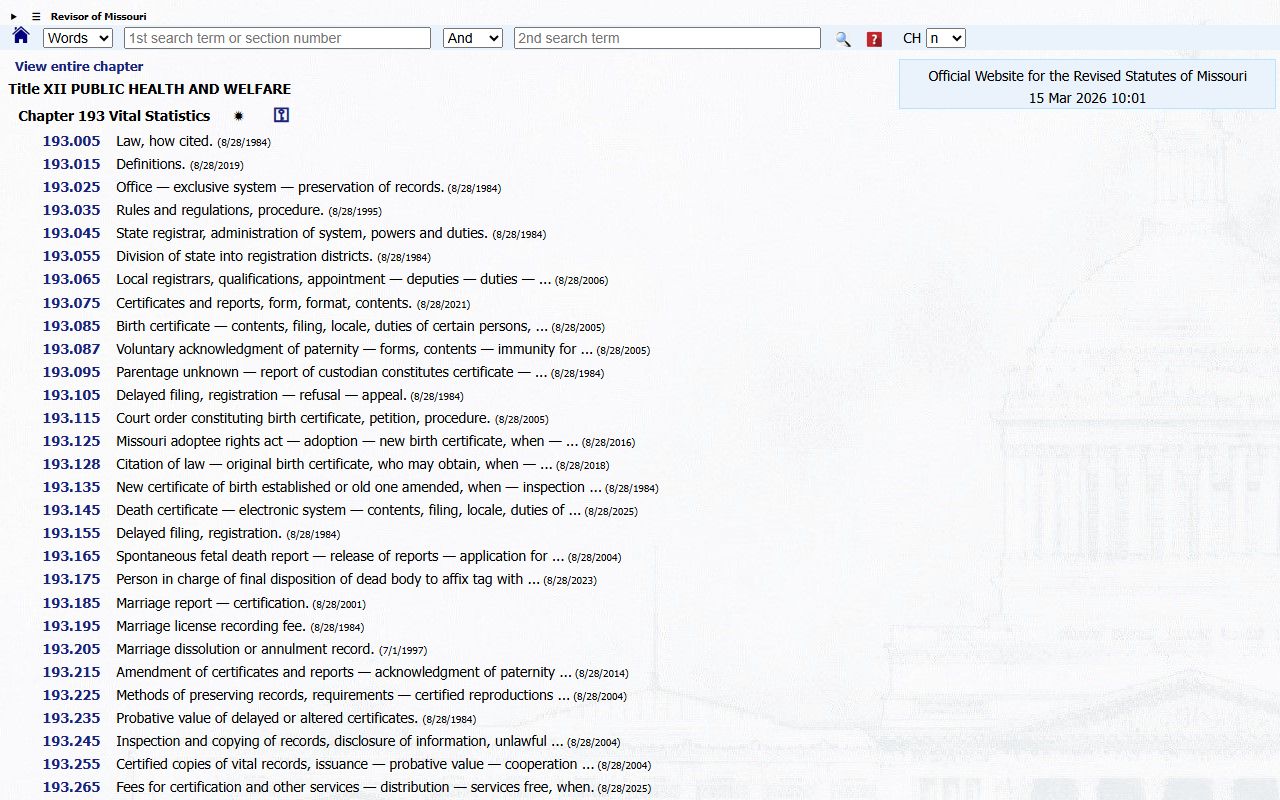
Under RSMo 193.085, a birth certificate must be filed with the local registrar within five days of birth. When a birth happens in a hospital or medical facility, the person in charge of the institution is responsible for preparing and filing the certificate. The attending physician provides the medical data. For births outside a facility, the attending physician, any person present at birth, or the parents are responsible for filing in that order of priority.
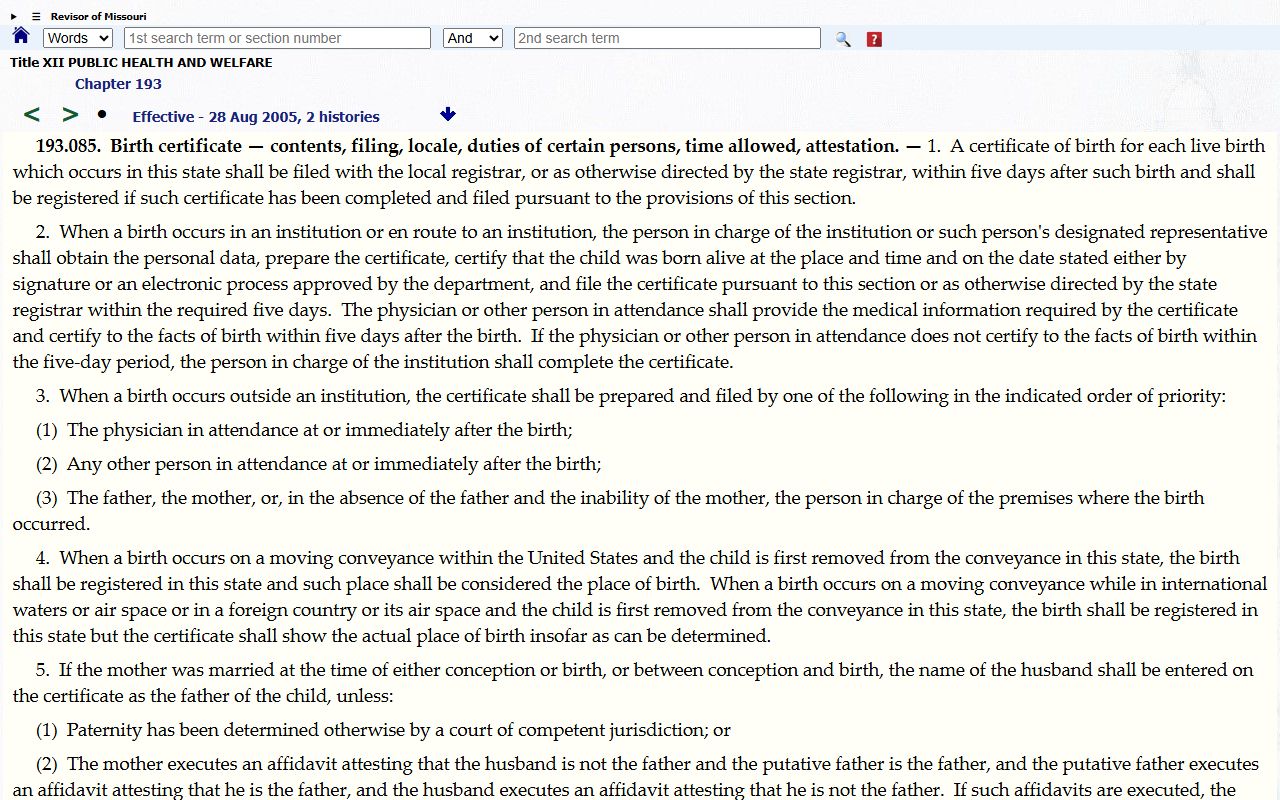
RSMo 193.085 also governs paternity on birth certificates. If the mother was married at the time of conception or birth, the husband's name is entered as the father unless a court has determined otherwise or both parties have signed paternity affidavits. For unmarried parents, the father's name is added only when a voluntary acknowledgment of paternity is completed or paternity is established by court order or the family support division.
A certified copy issued under RSMo 193.255 is considered for all legal purposes the same as the original document. It serves as prima facie evidence of the facts stated in it. This makes the certified copy the most useful form of the record for legal and identification purposes. Copies marked as "Delayed" or "Amended" carry those labels on all copies issued, which helps users understand the evidentiary weight of the document.
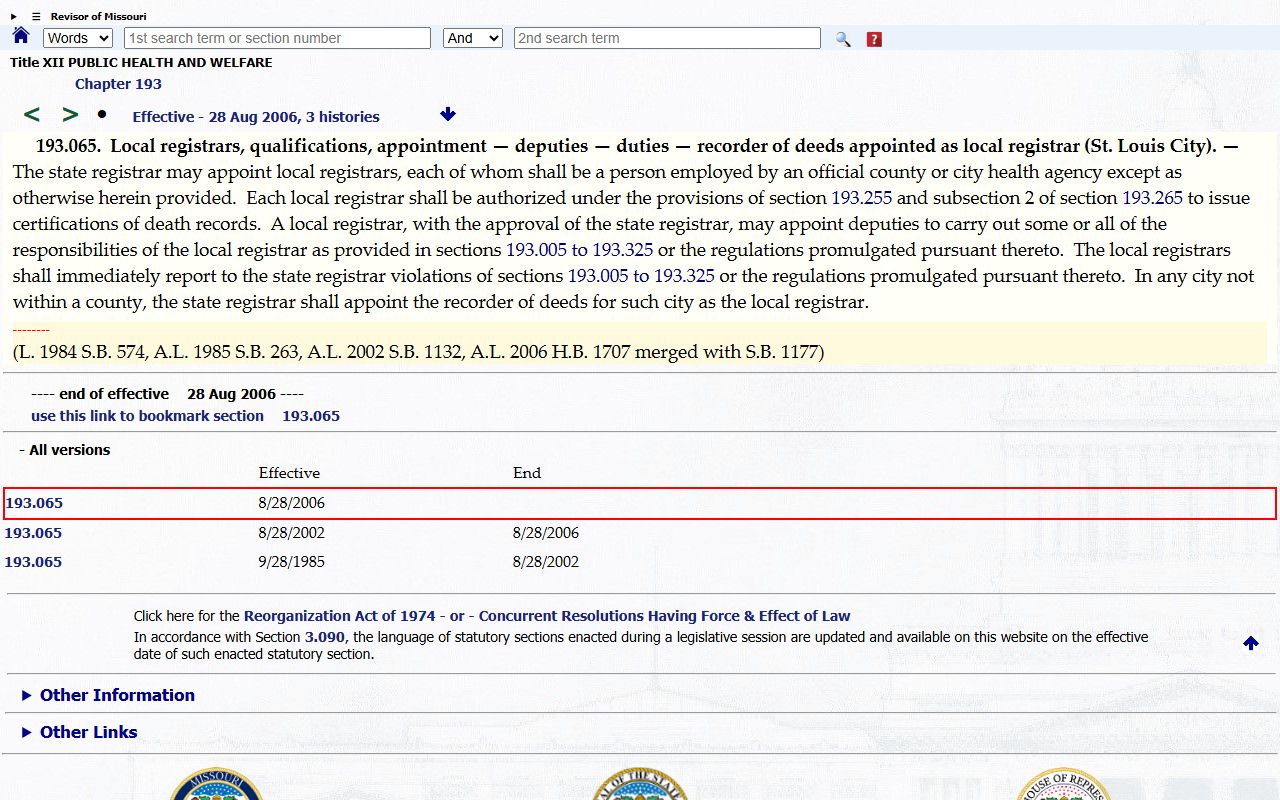
Local registrars in Missouri are appointed under RSMo 193.065. Each local registrar must be an employee of an official county or city health agency. In cities not within a county such as St. Louis City, the state registrar appoints the recorder of deeds as the local registrar. Local registrars are authorized to issue certain certifications and must report any violations of the vital statistics laws to the state registrar.
Missouri Adoptee Rights and Original Birth Certificates
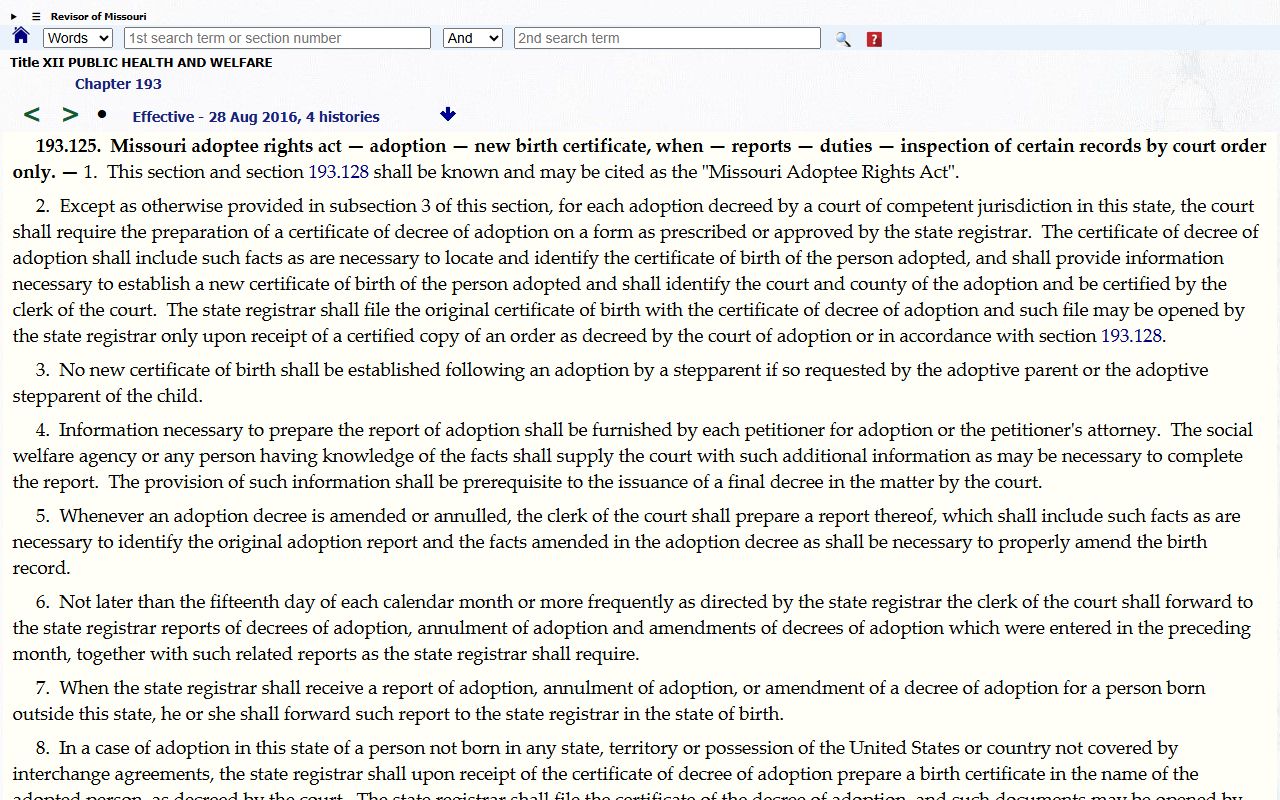
Missouri has a specific law that lets adoptees access their original birth certificates. Known as the Missouri Adoptee Rights Act, this law is in RSMo 193.125 and RSMo 193.128. Under the Act, an adopted person who is at least 18 years old, was born in Missouri, and files a written application with the state registrar can obtain an uncertified copy of their original birth certificate. The copy is stamped "For genealogical purposes only - not to be used for establishing identity."
Birth parents may file a contact preference form with the state registrar at any time. This form lets them indicate whether they want contact from the adoptee, prefer contact through an intermediary, or prefer not to be contacted at all. If both birth parents indicate they do not want contact, the original birth certificate will not be released. The state began issuing original birth certificates to eligible adoptees on January 1, 2018. Adoptees born before 1941 had access starting August 28, 2016.
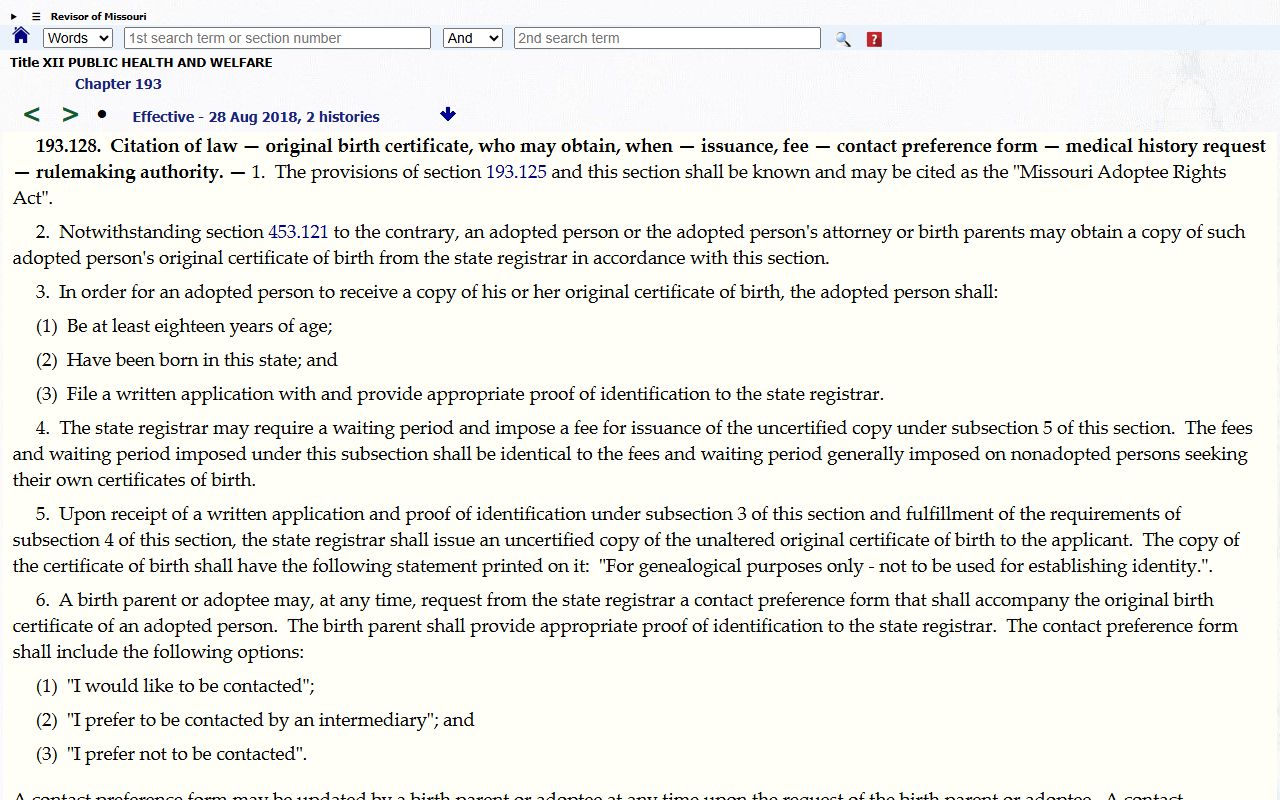
A non-certified copy requested under the Adoptee Rights Act requires a $15 non-refundable fee and takes about six weeks to receive. Only one copy is issued to the adoptee under this provision. Birth parents may also request a medical history form from the state registrar at any time. Lineal descendants of a deceased adoptee have the right to obtain the original birth certificate as well. For more on adoption records and the registry system, see RSMo 453.121.
Delayed Registration and Amended Birth Records
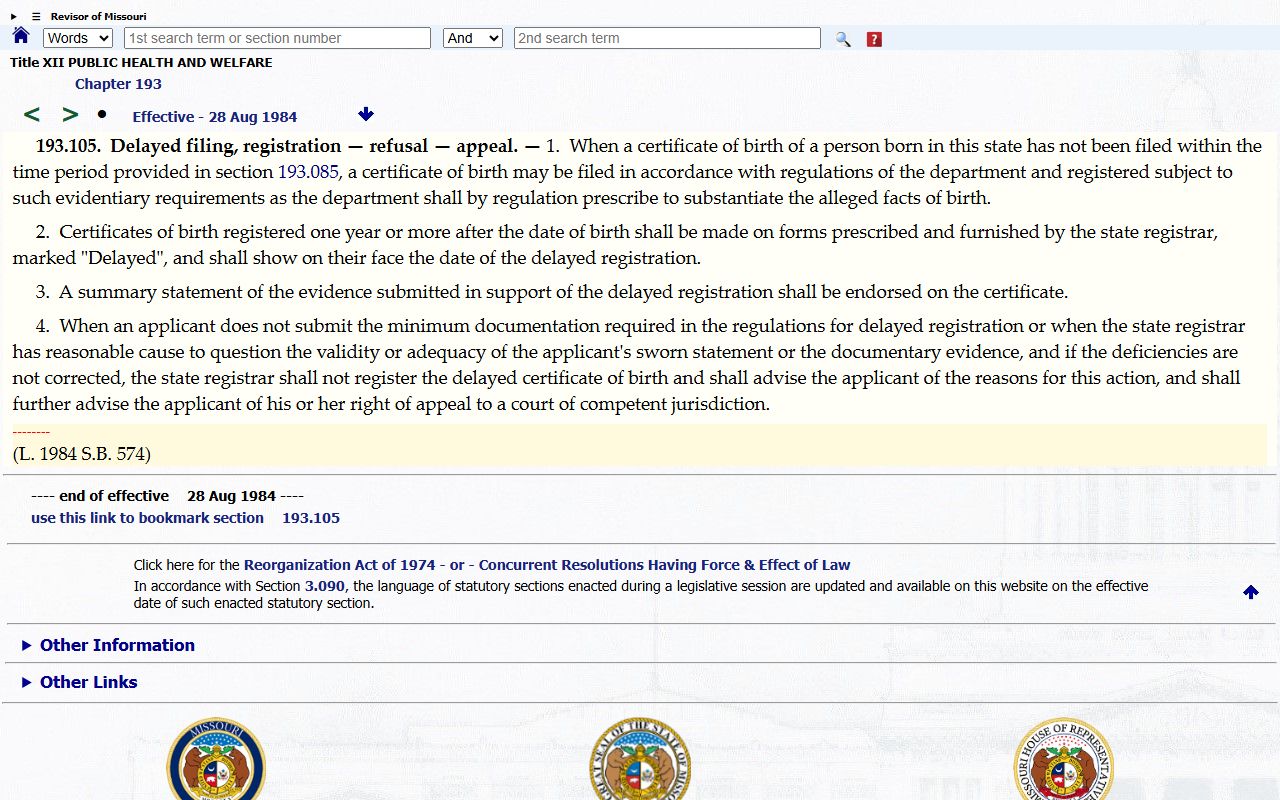
Some Missouri birth certificates were not filed within the required five-day window. RSMo 193.105 allows delayed registration of births that were not filed on time. A delayed certificate must be filed on state forms, marked "Delayed," and must show the date of the late registration on its face. The state requires supporting documentary evidence to back up the facts in a delayed certificate. If the applicant cannot provide enough evidence, the state registrar will reject the filing and advise the applicant of their right to appeal to a court.
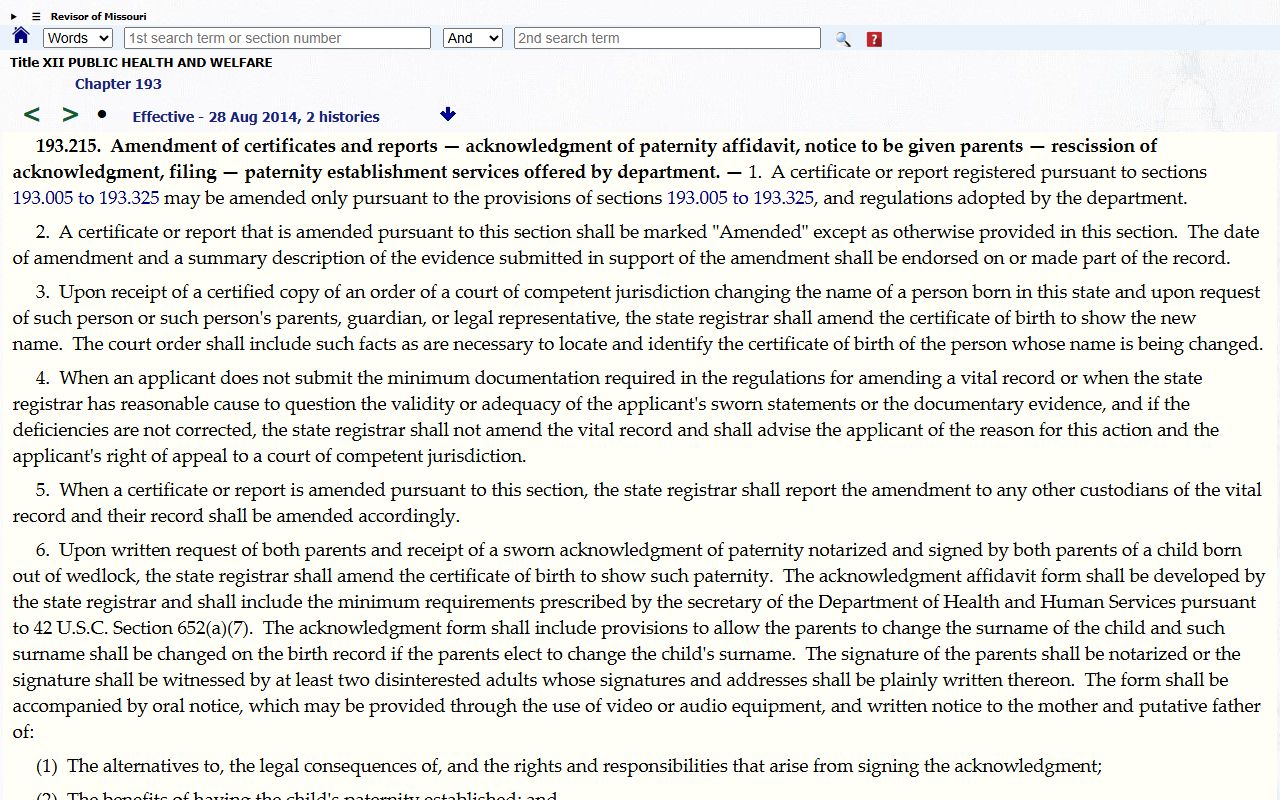
Birth records may also be changed after the fact under RSMo 193.215. Common reasons for amendments include name changes by court order, paternity additions, and sex designation changes following court-ordered surgical procedures. The state registrar marks amended records as "Amended" and records the date and a summary of the evidence supporting the change. For paternity additions, both parents must submit a notarized sworn acknowledgment of paternity.
Historical and Genealogical Birth Records in Missouri
For births before 1910, the state central registry holds no records. The Missouri State Archives is the best place to search for older documents. The Archives holds more than 336 million pages of paper records, 850,000 photographs, 9,000 maps, and 72,000 reels of microfilm. Researchers can visit the Archives research room in Jefferson City, or submit requests online. To make an appointment, email archives@sos.mo.gov or call (573) 751-3280. Staff also do limited research for patrons who cannot visit in person, at no cost. For St. Louis City or Kansas City births before 1910, contact those city or county health departments, since they had local registration systems predating the state registry.
The Missouri Digital Heritage website provides online access to more than 9 million records, including historical birth and death documents. The site brings together collections from the Missouri State Archives, the Missouri State Library, and local institutions across the state. FamilySearch has also indexed Missouri birth records from 1851 to 1910 with digital images available at no cost. The DHSS vital records page also notes: "You may also consider visiting the Secretary of State's Missouri Digital Heritage website" for records not found in the state registry.
County clerks in many Missouri counties held local birth and death records going back to the 1880s. The FamilySearch county genealogy pages for each county show which record sets are available and for what years. Many counties have records from 1883 to 1893 held by the County Clerk, separate from the state registry that began in 1910. The Missouri State Archives resources page explains copy fees and research procedures for these older documents.
Paternity and Voluntary Acknowledgment
Missouri has a specific process for adding a father's name to a birth certificate when the parents are not married. Under RSMo 193.087, when a birth occurs to an unmarried mother in a hospital or medical facility, the institution must provide a voluntary acknowledgment of paternity form for the parents to complete. The completed form is filed along with the birth certificate. Hospitals that provide this form are immune from civil or criminal liability for doing so.
The family support division develops and distributes the information on parental rights and responsibilities that must accompany the paternity acknowledgment form. It also provides free acknowledgment affidavit forms to hospitals. Any person who intentionally misidentifies another person as a parent on a paternity affidavit may be prosecuted for perjury. Getting paternity right on the birth record matters for child support, inheritance, and legal identity purposes.
Birth Record Fraud and Penalties
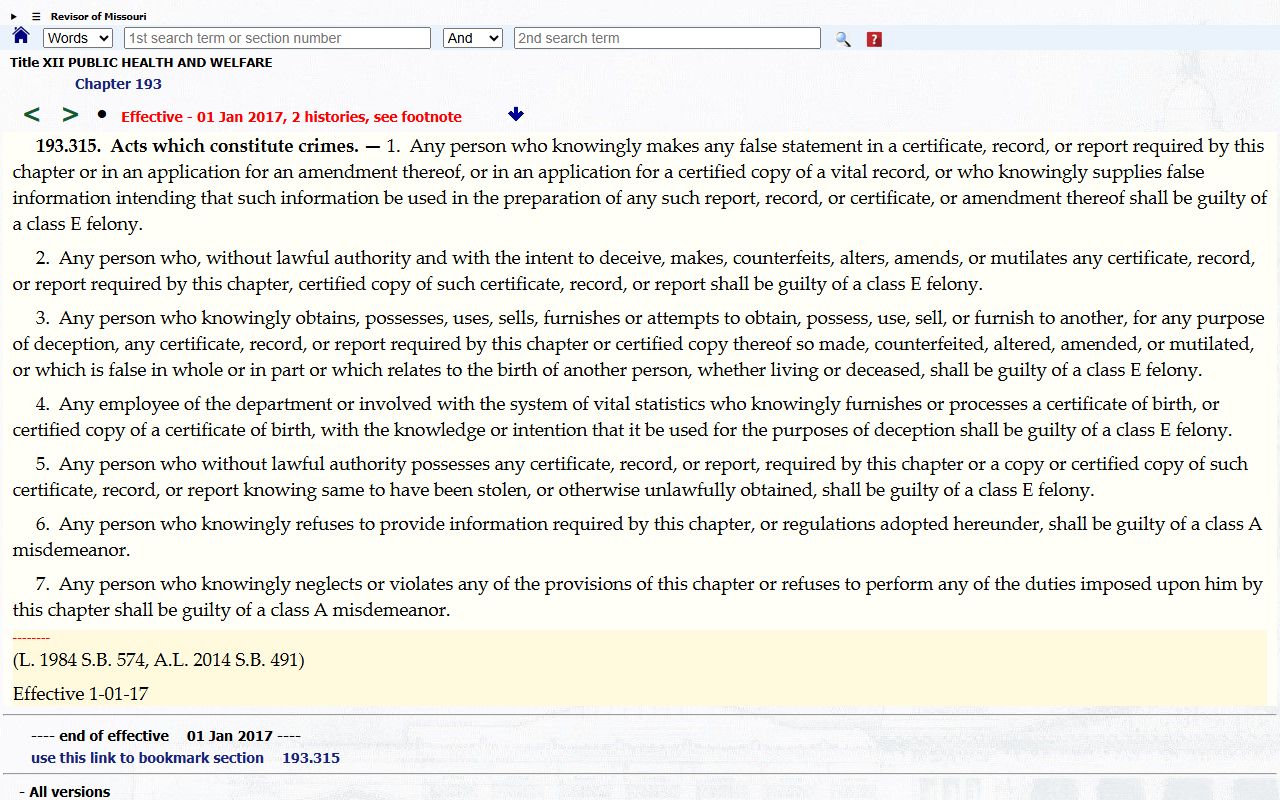
Missouri takes birth certificate fraud seriously. Under RSMo 193.315, making false statements on a birth certificate, counterfeiting a vital record, or using a fraudulent certificate for any purpose of deception is a class E felony. Knowingly possessing a stolen or unlawfully obtained vital record is also a felony. State department employees who process fraudulent birth certificates face the same class E felony charges. Willfully neglecting duties or refusing to provide information required by Chapter 193 is a class A misdemeanor.
These penalties protect the integrity of the vital records system. A birth certificate is the foundational document for most forms of legal identity. Fraudulent use of birth records can lead to identity theft, benefits fraud, and other serious crimes. Report suspected fraud to the Missouri Bureau of Vital Records at 573-751-6387 or to your local law enforcement agency.
Browse Missouri Birth Records by County
Each county in Missouri has a local public health agency that issues certified copies of birth certificates for births since 1920. Select a county below to find local contact information, health department addresses, and resources for birth records in that area.
View All 114 Missouri Counties
Birth Records in Major Missouri Cities
Residents of major Missouri cities obtain birth certificates through their county health department or the city-level local registrar. Select a city below to find specific resources and contact information for birth records in that area.